
Your professional image functions as a hidden resume during the current business environment of fierce competition. Your appearance initiates the negotiation process because it establishes your value before you start speaking or showing your presentation. When you dress appropriately for your profession, you provide people with a basis to believe in your skills before you display them.
The “Halo Effect” in Action
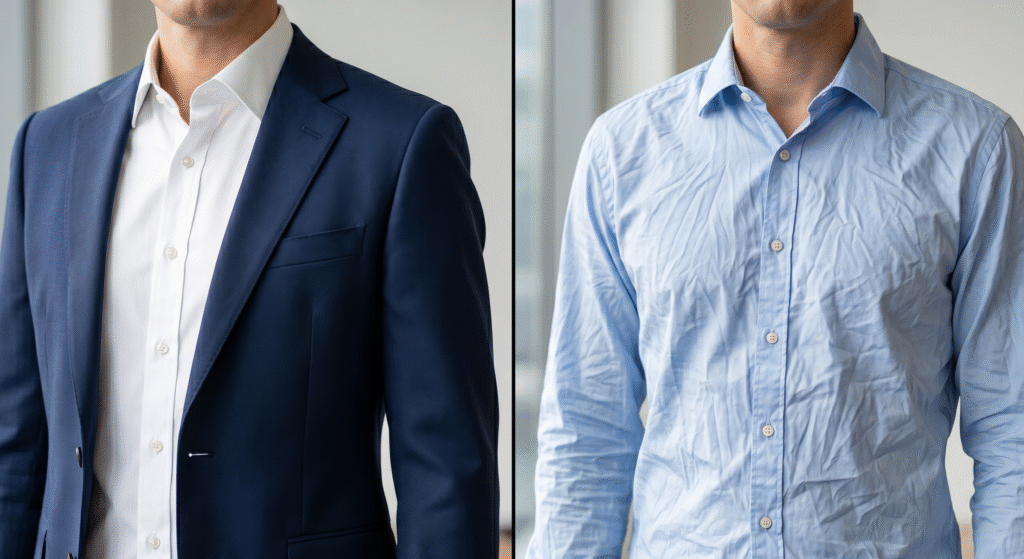
Psychologists use the term “halo effect” to describe how people form their first judgment about a neat appearance and then use that impression to evaluate someone’s intelligence and honesty and the candidate who wears a crisp blazer presents himself as more organized than the person who wears a wrinkled shirt even though both candidates have identical resumes.
Visual Competence and Trust

Clients search for indications that their financial status remains secure. A financial advisor who shows up in polished shoes and a tailored suit projects a sense of order. If you present yourself with visual competence it demonstrates your ability to handle your own appearance which means you will handle their investments at the same level of care.
The Power of Color Psychology

Successful leaders use color to control the energy level of their meeting spaces. For example, deep navy blue creates an image of authority and trustworthiness while soft grey makes you seem more friendly and cooperative during difficult team brainstorming sessions.
Dressing for the “Next” Role

The common career advice states that you should dress for your desired future job instead of your current role. The executives of your company will easily see you as a higher position candidate when you dress according to your company’s leadership level.
Attention to Detail as a Skill

The small details in business operations receive high importance. A clean watch, a lint-free coat, and a tidy workspace show that you don’t overlook small details and your boss believes that you will maintain the same careful approach when you need to assess a contract worth millions of dollars.
Respect for the Occasion
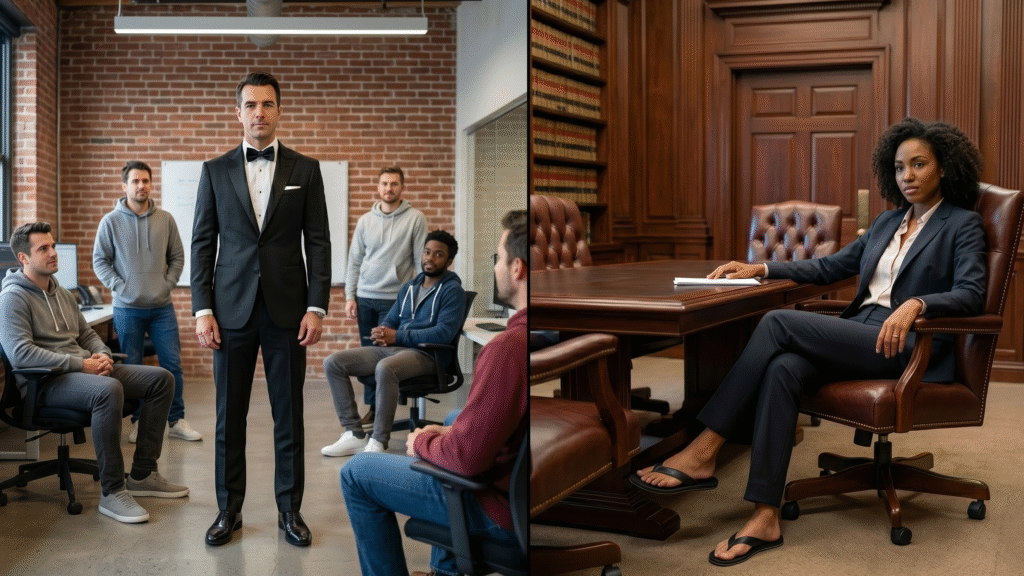
Your choice of meeting attire demonstrates your understanding of audience respect. A full tuxedo at a high-tech startup makes you seem out of touch but flip-flops at a law firm make you seem indifferent. Social intelligence finds expression through your ability to match the room’s atmosphere.
Confidence Through Comfort

Your body language shifts when you believe people find you attractive. You stand taller, make better eye contact, and speak with more conviction and the internal confidence boost people receive enables them to perform sales success and lead meetings with presence.
Cultural Sensitivity and Connection

International business operations require establishments to acquire knowledge about local customs and a professional who researches the dress code of a foreign branch before visiting shows cultural empathy. The visual effort to fit in assists people with international ties to develop trust through relationship building.
The “Uniform” for Mental Focus

Steve Jobs and Mark Zuckerberg are among many top CEOs who adopted a daily uniform that consists of simple clothing to minimize their decision-making effort. You can maintain a constant appearance through your high-quality clothing which allows you to dedicate your mental resources toward important business decisions instead of choosing your outfit every day.
Authenticity and Personal Brand

Your personal style serves as a way to tell your own unique story. You become more memorable through the use of bold glasses or unique accessories which make you stand out from others. A well-placed signature item in a generic suit helps people remember your name and face even after a meeting ends.
About the Author