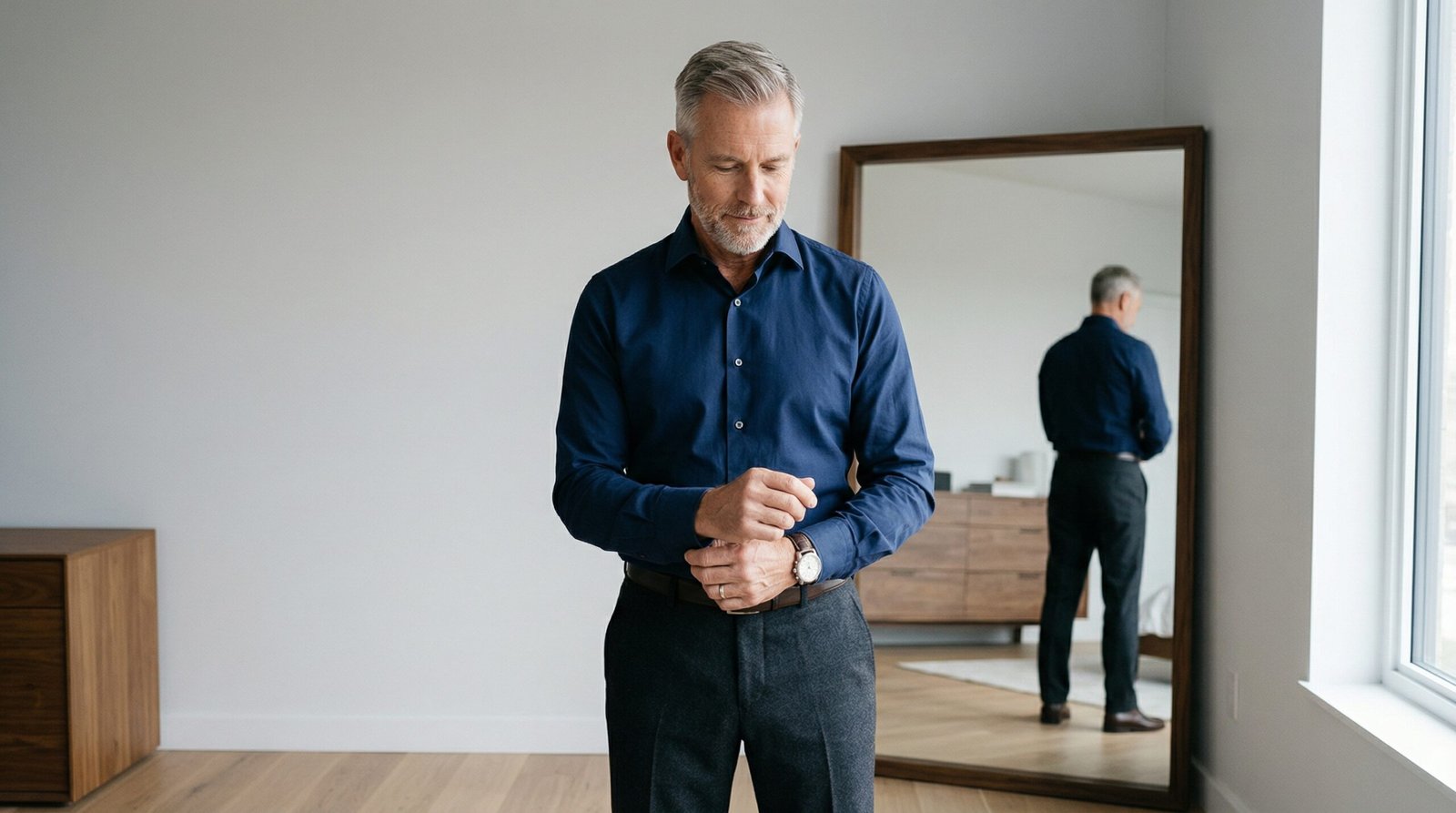
Nobody tells you when it happens. One day, you are simply a man who used to dress well, and somehow, along the way, a series of small, incremental surrenders added up to something you would not have recognized at thirty-five. Here are the eight mistakes that cause significant damage quietly, gradually, and without any notice.
1. Wearing Clothes That Fit the Body You Had, Not the Body You Have
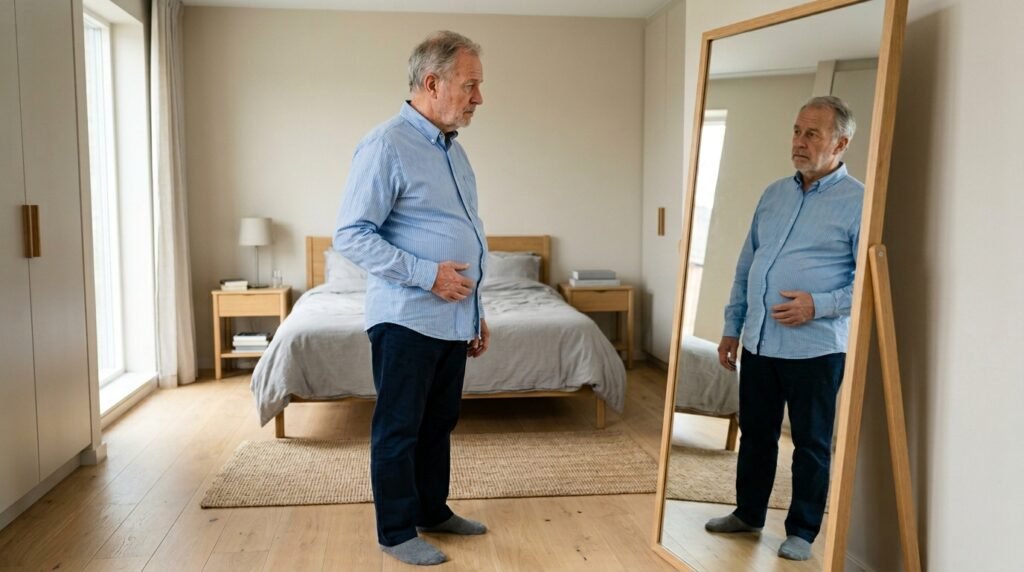
This is the most common mistake and the most consequential. Bodies change with age, shoulders shift, waists expand, posture evolves, and yet a significant number of men continue buying and wearing the same sizes, the same cuts, and the same silhouettes they wore fifteen years ago as though the mirror has simply stopped being reliable. A shirt that pulls across the midsection does not read as fitted. Fit is not vanity. It is the single most powerful tool in any man’s wardrobe, and it costs nothing except the willingness to be honest.
2. Neglecting Skin Without Realizing What It Communicates
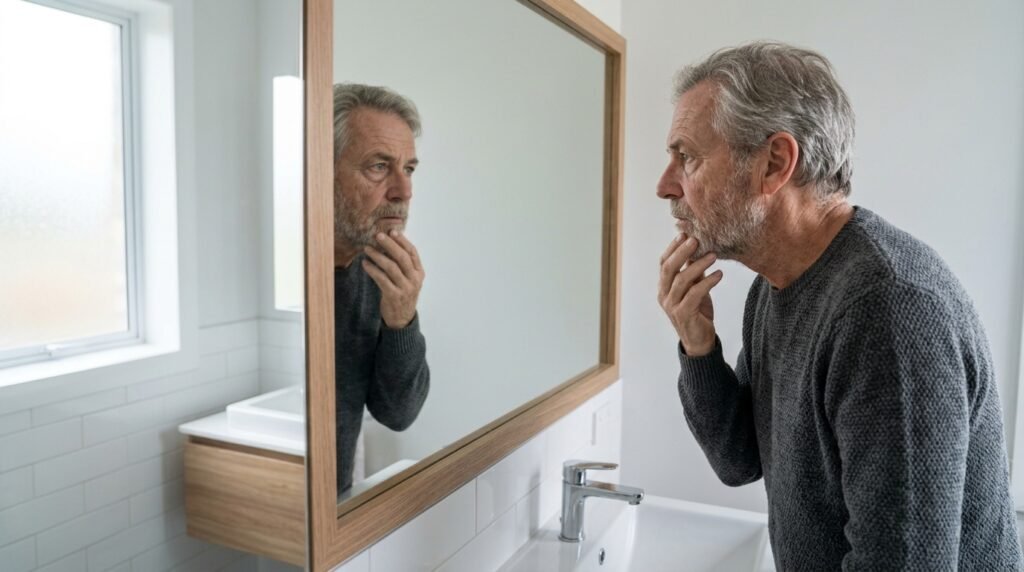
Skin that has been consistently moisturized, protected from the sun, and cleaned properly does not look younger in an artificial way. It looks healthy, which is something else entirely and considerably more attractive. The man who has never used SPF in his life is not rugged. He is simply someone whose skin tells the story of every hour of unprotected sun exposure in one continuous, permanent record. Start somewhere. A moisturizer with SPF 30 is a thirty-second daily investment with a compounding return.
3. Letting the Grooming Details Slide Into Invisibility
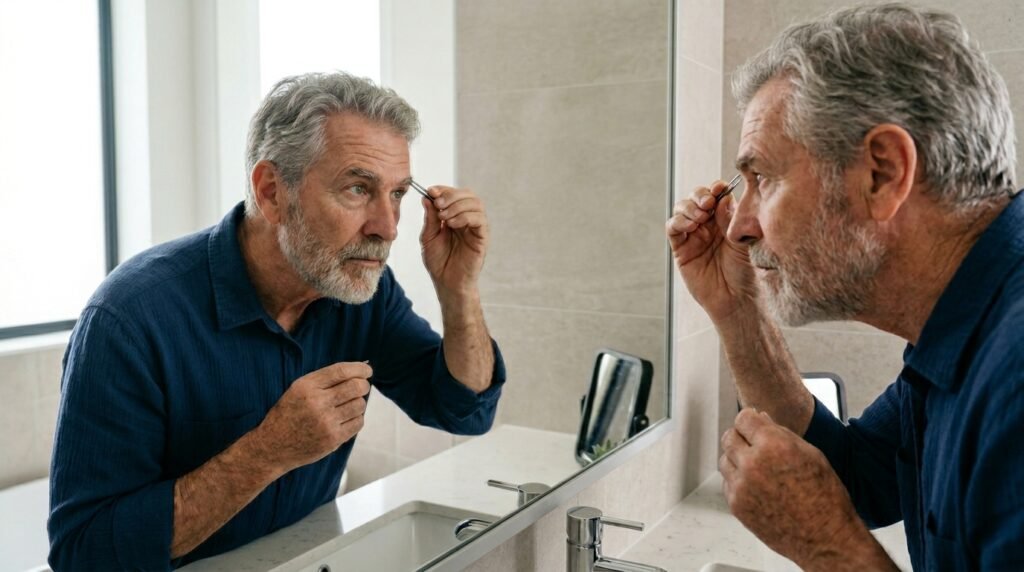
There is a version of grooming that younger men manage almost unconsciously and older men gradually abandon, not through laziness exactly but through a slow recalibration of what seems worth the effort. Nose hair. Ear hair. Eyebrows that have begun making independent architectural decisions. Attractiveness at any age is largely an argument made in the details. Stop letting the details slip.
4. Defaulting to the Same Haircut From Twenty Years Ago
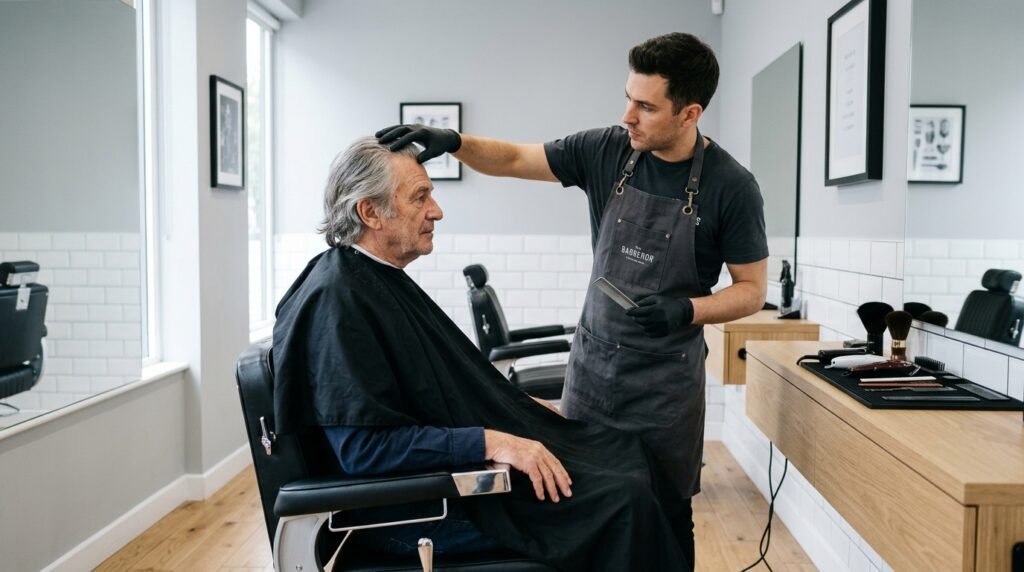
Hair changes. Texture changes, density changes, the way it behaves in humidity changes, and the face it frames change most of all. And yet a remarkable number of men approach their fifties and sixties wearing the exact same haircut they chose in their thirties, not because it still works but because it once worked and the conversation about changing it has never seemed worth having. A good barber with an honest eye and the freedom to make a genuine recommendation is one of the highest-return investments available to any man.
5. Confusing Comfort With Surrender
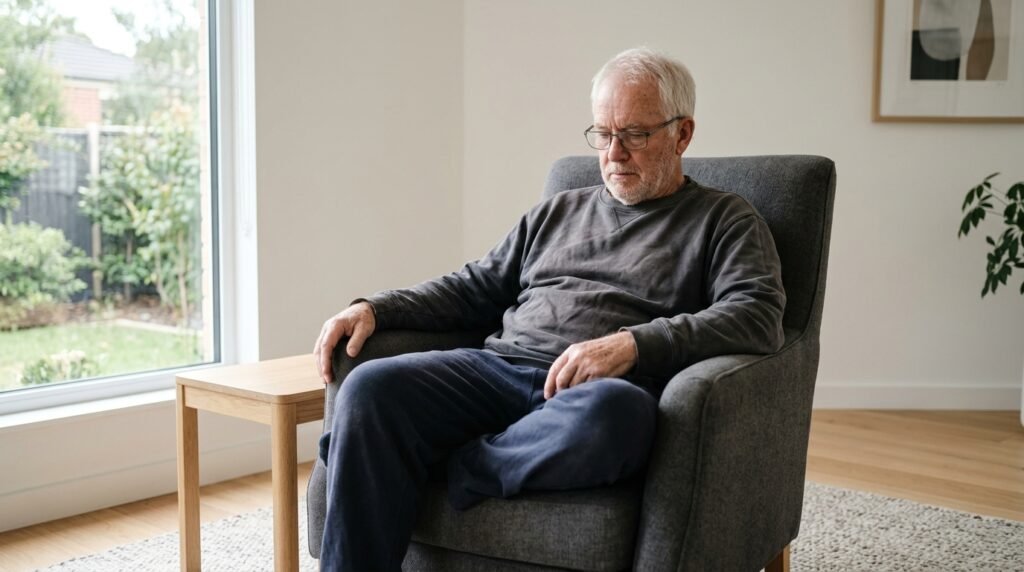
There is nothing wrong with prioritizing comfort. The elastic waistband that replaced the belt. The sneakers were worn not as a style choice but as a permanent default. The fleece that became a wardrobe anchor rather than a weekend layer. Comfort clothing worn with intention and good fit can be deeply stylish. Comfort clothing worn as a series of small concessions to the idea that appearance no longer merits effort reads exactly like what it is. The difference between the two is not the garment. It is the literal and figurative posture of the man wearing it.
6. Ignoring Posture When Posture Is Doing Most of the Work
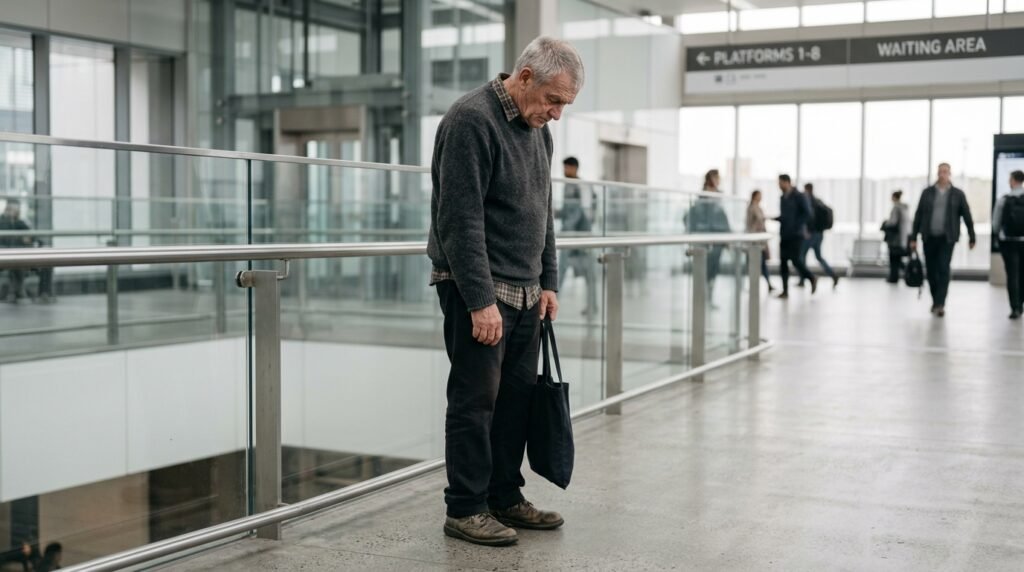
A man who rounds forward, drops his head, and collapses slightly at the chest communicates something else entirely, regardless of what he is wearing, how well-groomed he is, or how much he has invested in any other dimension of his appearance. Posture is the frame. Everything else hangs on it. And unlike most things on this list, it can be addressed immediately, right now, without purchasing anything.
7. Dressing for the Age They Think They Should Be, Not the Age They Are
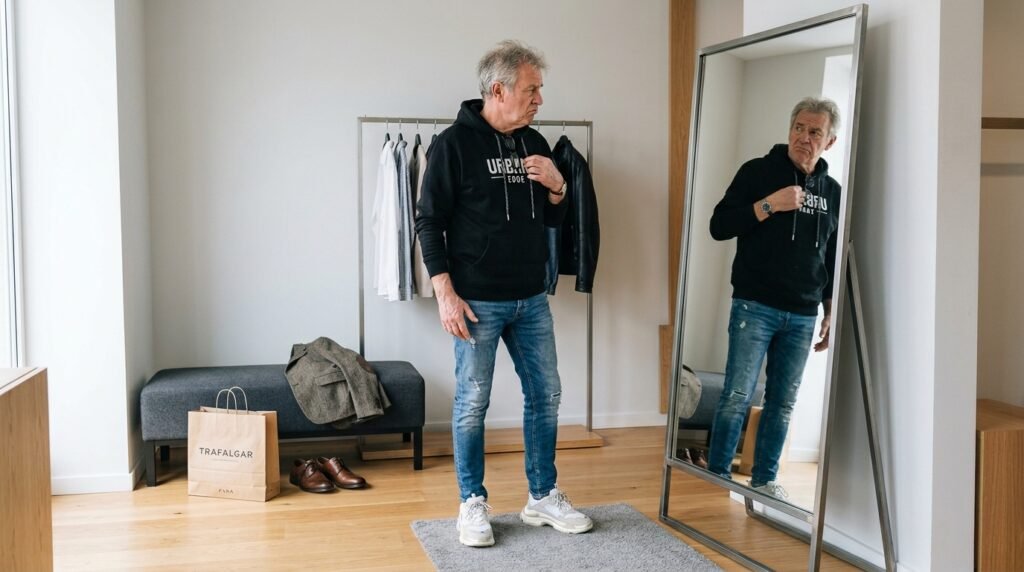
There are two failure modes here, and they operate in opposite directions, both equally damaging. It does not read as youthful. It reads as unresolved. The second is the man who dresses a decade or two older, surrendering prematurely to a version of himself he does not need to become yet. The target is neither. The most attractive older men dress precisely for who they actually are with the confidence and ease of someone who has genuinely stopped needing anyone else’s approval.
8. Underestimating What Physical Vitality Communicates at Every Age

This is not about weight. It is not about conforming to any particular body standard or chasing an aesthetic that belongs to a different decade of a man’s life. Attractiveness at fifty, sixty, and beyond is overwhelmingly a function of vitality. The man who carries himself with energy, who is present in conversation, who has the stamina and the physical ease that come from taking reasonable care of himself, is almost always more attractive than the man who has better bone structure and has decided that the effort is no longer necessary.
About the Author


