
Marriage operates as the most demanding team sport yet men begin their marriage season without emotional preparation. A partner needs to possess relationship skills which enable him to handle challenging times instead of knowing all relationship solutions. The development of these skills allows you to establish yourself as more than a roommate who functions as a dependable support system for your forthcoming household.
The Art of “The Pause”

When an argument gets heated, the urge to snap back is strong and the ability to control your speech through ten-second breathing breaks stops you from making irreversible statements. The device functions as a mental circuit breaker which prevents minor sparks from escalating into full-scale house fires.
Active Mirroring

When your partner shares their experience of a challenging day they seek your listening skills rather than your problem-solving abilities. You build actual partnership with them by repeating their words back to them through the statement “It sounds like that meeting really drained you.”
Emotional Vocabulary

The ability to express emotions more than “I’m fine” or “I’m annoyed” acts as a superpower. The ability to express “I feel overwhelmed because I’m worried about our budget” enables your partner to understand your needs. The relationship achieves resolution through clear communication.
Ownership of the “Ouch”

People who take responsibility for their actions show strength through their choice to accept blame for mistakes which they did not mean to do. The relationship receives healing through the genuine apology “I’m sorry I forgot the groceries; I see how that adds to your stress” which creates better results than any defensive excuse would.
Predicting the Rain
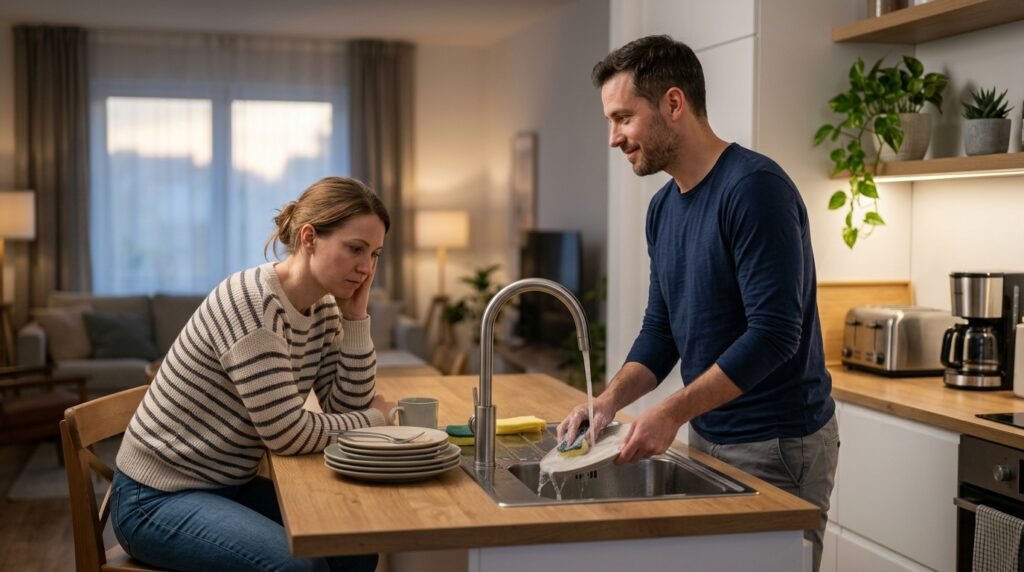
The process involves tracking changes in social behavior which indicate an upcoming violent event. The relationship requires you to check your partner’s emotional state through their behavior by delivering tea and completing tasks without being told.
Self-Soothed Stress

The partner functions as both your support system and your emotional waste disposal system. You stop bringing your work problems home to your spouse after you learn to control your work stress through exercise and your hobbies.
The “Soft Startup”

The phrase “I’ve been thinking about…” creates a better starting point for difficult conversations than “Why did you…”. The two actions differ because opening a door requires you to push it while kicking it down makes entry more forceful.
Conflict De-escalation

The person who provides a “peace offering” during a fight through physical contact or lighthearted joking shows their fighting partner that they belong to the same group and the objective requires the parties involved in the dispute to identify a solution instead of competing to achieve success.
Vulnerability Without Shame

The act of sharing your work-related fears and health anxieties and parenting challenges establishes a strong relationship. Your decision to show vulnerability enables your partner to trust you completely.
Curiosity Over Judgment

When your partner behaves in a way which makes you puzzled about their actions you should ask “Help me understand why you feel that way” instead of thinking negative thoughts about them. The husband should be seen as a puzzle which must be solved because that approach will keep the relationship between spouses both loving and respectful.
About the Author


